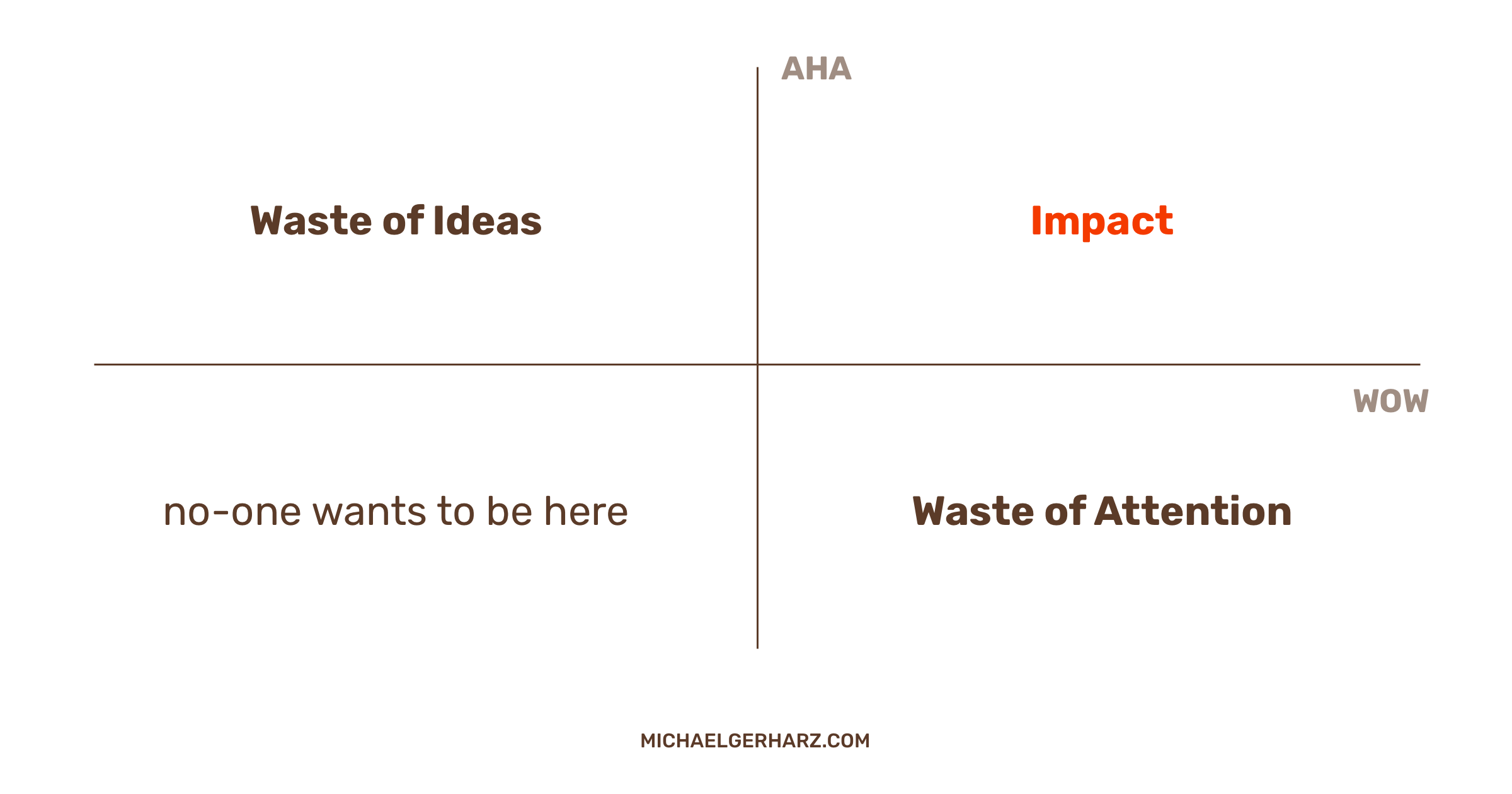
We can all agree that you never want to be in the bottom left quadrant.
But surprisingly, there are strong proponents for the top left and bottom right quadrants.
The genius who refuses to make an impact sits in the top left. They have huge talent and brilliant ideas but they are wasting their talent because they can’t get people to pay attention to their ideas. Worse, they almost refuse to get bigger attention because they insist that
- “this is how our customers expect it”,
- “WOW” is a trickster skill of the show-offs,
- “getting attention” equals “click bait”, and
- “great work will prevail”.
They’ll never make it to the top right.
In the bottom right sits the show-off who dazzles the audience but lacks substance. They are brilliant at getting their audience’s attention but leave them short of a profound insight. Worse, they almost refuse to make an impact because they insist that
- “this is how it’s done”,
- “how you say it is more important than what you say”,
- “people are bored by the details”, and
- “we need more bang”.
They’ll never make it to the top right, either.
Here’s the thing:
Without attention, people won’t hear your story.
Without substance, your story won’t make an impact.
The point is that this is not either-or. You need both.
WOW opens the mind. AHA changes the mind.
Keep lighting the path and make a bigger impact!

